Fix Windows SYSTEM SERVICE EXCEPTION Blue Screen 2025
Resolve SYSTEM_SERVICE_EXCEPTION BSOD error in Windows 10/11. Fix driver crashes, DPC watchdog violations, and kernel exceptions causing system service exception blue screens 2025.
What is SYSTEM_SERVICE_EXCEPTION Error?
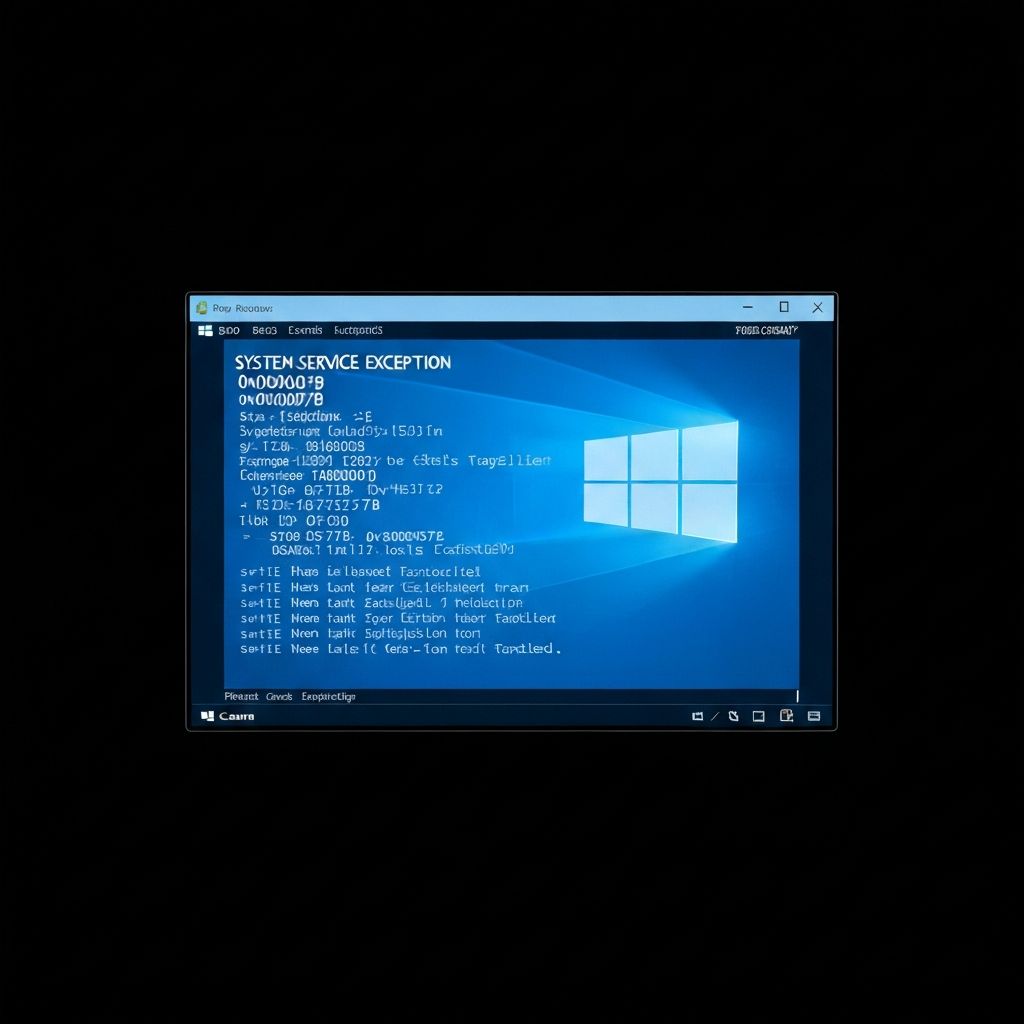
SYSTEM_SERVICE_EXCEPTION is a critical Blue Screen of Death error occurring when a system service or driver encounters an unexpected exception while executing in kernel mode. This Windows stop code indicates a driver threw an exception that the system service dispatcher couldn't handle, typically caused by faulty drivers, corrupted system files, or hardware issues.
Understanding system service exceptions
Exception types causing BSO D:
- Invalid memory access by drivers (access violations)
- Null pointer dereferences in kernel code
- Division by zero in driver calculations
- Stack overflow in system services
- Unhandled exceptions in third-party drivers
Error usually shows faulting module name (like ntfs.sys, dxgkrnl.sys) indicating source of crash.
Common causes in 2025
- Graphics drivers with unhandled exceptions (NVIDIA, AMD)
- Storage controller drivers (NVMe, SATA) throwing errors
- Audio drivers crashing during processing
- Webcam/camera drivers with memory leaks
- VPN or firewall drivers with kernel bugs
- Antivirus real-time protection kernel modules
- Windows system file corruption
Step-by-step fixes
- Boot into Safe Mode - Tests if third-party driver causing crashes
- Update all drivers - Use Device Manager or manufacturer websites
- Run Driver Verifier - verifier.exe to identify problematic drivers
- Update graphics drivers - Clean install using DDU utility
- Check for Windows Updates - Install all pending security patches
- Run SFC and DISM - Repair corrupted system files
- Disable recent driver installations - Roll back recently updated drivers
- Check crash dumps - Analyze minidump files for faulting driver
Using Driver Verifier to find bad drivers
Driver Verifier is Windows built-in tool to stress-test drivers:
- Run Command Prompt as administrator
- Type: verifier /standard /all
- Restart computer
- If BSOD occurs during startup, boot to Safe Mode
- Run: verifier /reset to disable
- Check crash dump for driver that failed verification
- Update or uninstall that driver
Warning: Driver Verifier will cause BSODs intentionally to identify bad drivers. Have Windows installation media ready before running.
Graphics driver specific fixes
GPU drivers commonly cause system service exceptions:
- Use DDU (Display Driver Uninstaller) in Safe Mode to fully remove
- Download Studio/Stable drivers instead of Game Ready (NVIDIA)
- Use AMD Cleanup Utility before installing new AMD drivers
- Don't install unnecessary bloatware (GeForce Experience, AMD Software)
- Rollback to previous working driver version if latest causes issues
- Disable hardware-accelerated GPU scheduling if causing crashes
Storage driver issues
NVMe and SATA drivers can throw exceptions:
- Update NVMe driver from motherboard manufacturer website
- If using Samsung NVMe, update Samsung NVMe Driver
- Check for firmware updates for SSD/NVMe drives
- Disable write caching on drives - Device Manager > Drive Properties
- Run CHKDSK /F /R on system drive to fix file system errors
- Update motherboard chipset drivers (includes storage controller)
Analyzing crash dumps
Finding cause from minidump files:
- Install WinDbg from Windows SDK
- File > Open Crash Dump > C:\\Windows\\Minidump\\latest.dmp
- Run: !analyze -v command
- Look for "MODULE_NAME" and "IMAGE_NAME" entries
- Google the faulting module name with "system service exception"
- Update or uninstall driver/software related to that module
Common faulting modules:
- dxgkrnl.sys - Graphics kernel, update GPU drivers
- ntfs.sys - File system, run CHKDSK and SFC
- ks.sys - Streaming drivers, update audio/video drivers
- netio.sys - Network I/O, update network drivers
- storport.sys - Storage drivers, update storage controller
Audio driver fixes
Audio drivers frequently throw exceptions:
- Update Realtek Audio drivers from motherboard website
- Disable audio enhancements - Sound > Playback > Properties > Enhancements > Disable all
- Roll back to older working audio driver version
- If using USB audio interface, update its drivers separately
- Disable unused audio devices in Device Manager
- Reinstall audio driver with "Delete driver software" checked
Antivirus/Security software
Real-time protection can cause kernel exceptions:
- Temporarily uninstall third-party antivirus completely (not just disable)
- Test if crashes stop without antivirus installed
- If antivirus is cause, switch to different security software
- Windows Defender rarely causes this error
- Check antivirus forums for known compatibility issues with Windows 11
Advanced fixes
For persistent system service exceptions:
- Check Event Viewer - System logs for recurring errors before BSOD
- Update BIOS/UEFI firmware from motherboard manufacturer
- Test RAM with MemTest86 (hardware defects cause random exceptions)
- Disable Fast Startup - May cause driver initialization issues
- Perform clean boot - msconfig > Selective startup
- Check temperatures - Overheating CPU/GPU can cause driver crashes
- Reset Windows 11 keeping files - Nuclear option if nothing else works
Webcam/Camera driver issues
Camera drivers often throw exceptions in video calls:
- Update integrated webcam drivers from laptop manufacturer
- If using external USB webcam, update its specific drivers
- Disable camera in Device Manager if not used regularly
- Uninstall camera software like Logitech Capture, Razer Synapse
- Test video calls in Safe Mode with Networking
Prevention tips
Minimize future system service exceptions:
- Keep Windows and all drivers updated monthly
- Use stable/certified drivers over beta versions
- Run Driver Verifier occasionally to catch problems early
- Monitor Event Viewer for warning signs before crashes occur
- Create system restore points before driver updates
- Don't install unnecessary driver software (toolbars, utilities)
\\\`
Related errors
Resolve Windows IRQL_NOT_LESS_OR_EQUAL blue screen error. Fix driver conflicts, memory issues, and kernel-level crashes causing IRQL BSOD stop code in Windows 10/11 2025.
Fix Windows BSOD kernel security check failure. Memory corruption, driver conflicts, and system file errors causing critical security check crashes.