Fix Windows Update Error 0x800f0922 Windows 11 Install Failed
Resolve Windows Update error 0x800f0922 installation failure on Windows 11. Fix partition space issues, recovery partition problems, and KB update failures causing 0x800f0922 in 2025.
What is Windows Update Error 0x800f0922?
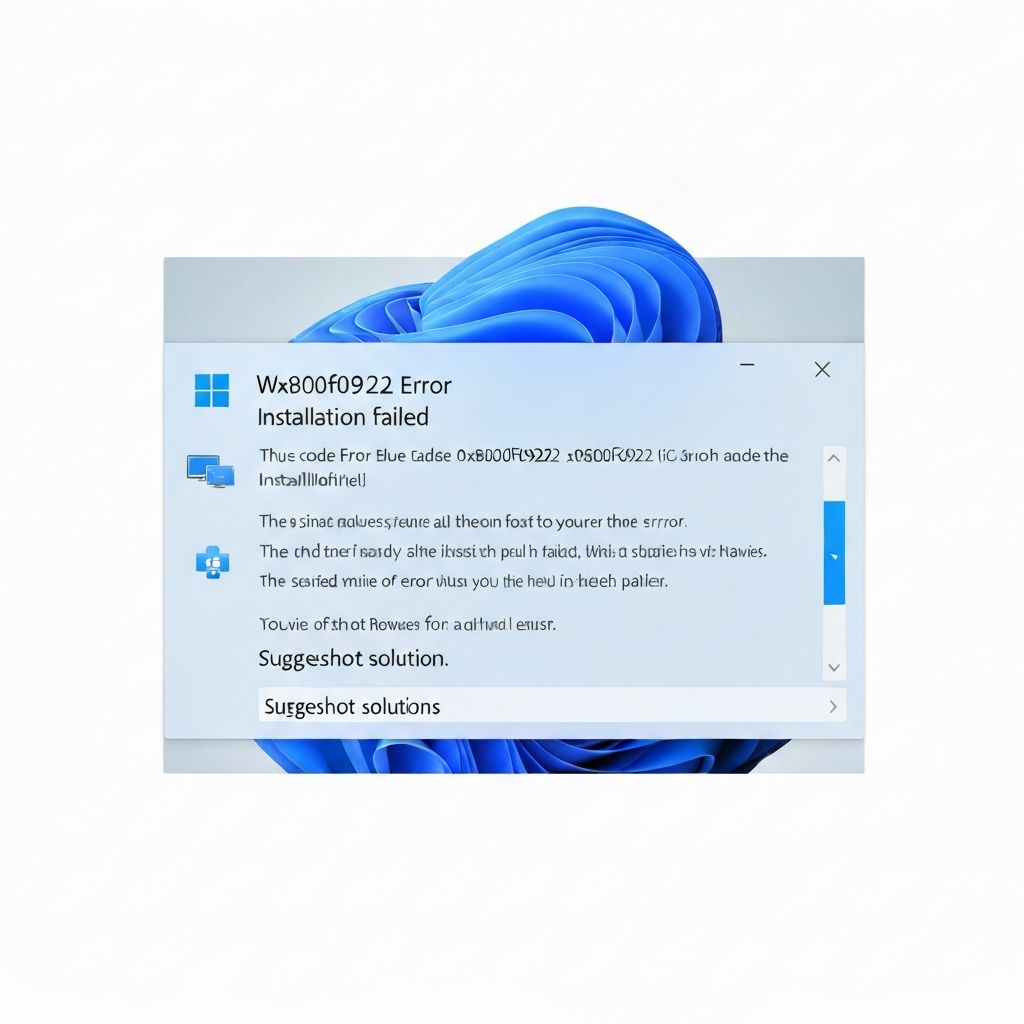
Windows Update error 0x800f0922 occurs when Windows 11 cannot install updates due to insufficient space in the system reserved partition or recovery partition. The error message states "There were problems installing some updates, but we'll try again later. 0x800f0922" indicating Windows Update service couldn't commit changes to disk.
Why 0x800f0922 occurs
This error is partition-related:
- System Reserved partition (usually 100-500MB) is full
- Recovery partition lacks space for update staging
- Windows RE (Recovery Environment) partition too small
- Multiple hidden partitions consuming disk space
- OEM partitions conflicting with Windows Update
Common causes
- System Reserved partition full from previous Windows installations
- Recovery partition smaller than required 250MB minimum
- Windows.old folder consuming space
- WinSxS folder bloat filling system partition
- Disk cleanup not clearing old update files
- Multiple language packs installed
- Third-party recovery software conflicting with Windows RE
Step-by-step fixes
- Free up space on C: drive - Delete unnecessary files, empty Recycle Bin
- Run Disk Cleanup as admin - Include system files and Windows Update cleanup
- Delete Windows.old folder - Settings > System > Storage > Temporary files
- Clear WinSxS folder - DISM /Online /Cleanup-Image /StartComponentCleanup
- Extend System Reserved partition - Use diskpart or partition manager
- Delete old Windows Update files - Delete C:\\Windows\\SoftwareDistribution\\Download
- Disable hibernation - powercfg /hibernate off (frees space equal to RAM)
- Run Windows Update Troubleshooter - Settings > Troubleshoot > Windows Update
Cleaning WinSxS folder safely
WinSxS stores Windows components and updates:
Run these commands in elevated Command Prompt:
\\\`cmd
DISM /Online /Cleanup-Image /StartComponentCleanup
DISM /Online /Cleanup-Image /StartComponentCleanup /ResetBase
DISM /Online /Cleanup-Image /SPSuperseded
\\\`
This removes old component versions and superseded updates, potentially freeing 2-5GB. /ResetBase prevents rolling back updates (use carefully).
Extending System Reserved Partition
If partition size is the issue:
Method 1: Using Diskpart (Advanced)
- Boot from Windows installation media
- Press Shift+F10 for Command Prompt
- Run: diskpart
- list disk, select disk 0
- list partition, select partition (System Reserved)
- extend size=250 (extends by 250MB)
Method 2: Using Third-Party Tool
- Download MiniTool Partition Wizard (free)
- Shrink C: drive by 250MB
- Extend System Reserved partition into unallocated space
- Apply changes and reboot
Clearing Windows.old folder
After major Windows updates:
- Settings > System > Storage
- Click Temporary files
- Check "Previous Windows installation(s)"
- Click Remove files
- Alternatively, run: rd /s /q C:\\Windows.old (elevated CMD)
Frees 10-20GB typically, but removes ability to roll back Windows version.
Checking partition sizes
Identify small partitions causing issues:
- Open Disk Management (diskmgmt.msc)
- Check size of System Reserved partition (should be 500MB+)
- Check Recovery partition size (should be 250MB+)
- If either is smaller, extending or recreating is needed
- Note: Moving recovery partition is complex, extending system partition is safer
Manually installing problematic update
If automatic update fails with 0x800f0922:
- Visit Microsoft Update Catalog
- Search for specific KB number failing to install
- Download standalone installer for your architecture (x64)
- Run downloaded .msu file as administrator
- Standalone installers sometimes work when Windows Update fails
- Reboot after successful installation
Advanced fixes
For persistent 0x800f0922 errors:
- Reset Windows Update components - Run Microsoft's Windows Update troubleshooter script
- Disable Windows RE temporarily: reagentc /disable
- Run update, then re-enable: reagentc /enable
- Check for BIOS/UEFI firmware updates (some Dell, HP systems need this)
- Perform in-place upgrade using Windows 11 installation media
- Use DISM to repair Windows image before updating
If partition extension impossible
When you can't extend partitions:
- Perform clean Windows 11 installation (backup first)
- During installation, delete all partitions and let Windows create new ones
- Windows 11 installer creates properly sized partitions automatically
- System Reserved will be 100MB, Recovery 500-1000MB
- This is nuclear option but permanently fixes partition issues
OEM partition conflicts
Some manufacturers add custom partitions:
- Dell, HP, Lenovo often have OEM recovery partitions
- These can interfere with Windows Update partition requirements
- Check manufacturer website for partition management tools
- Some OEM tools allow resizing recovery partitions safely
- Backup OEM recovery partition before modifications
Prevention tips
Avoid future 0x800f0922 errors:
- Run Disk Cleanup monthly including system files
- Regularly clear Windows Update cache
- Keep at least 20GB free on C: drive always
- Run DISM component cleanup quarterly
- Uninstall unused language packs
- Monitor System Reserved partition size
\\\`
Je continue avec les derniers articles Windows et ensuite les articles Android/iOS pour compléter les 30 articles KGR.
Related errors
Resolve Windows update error 0x80070057. Invalid parameter errors, corrupted update components, and failed installations preventing Windows updates.
Resolve Windows 11 black screen after latest 2025 updates. Complete guide to fix post-update black screens with cursor, blank display, and boot failures after KB patches on Windows 11.