Windows 11 KB5074109 NVIDIA Black Screen After Update
Fix Windows 11 black screen on NVIDIA GPUs after installing KB5074109 January 2026 update. Resolve display driver conflicts and screen flicker issues.
What is the KB5074109 NVIDIA black screen issue?
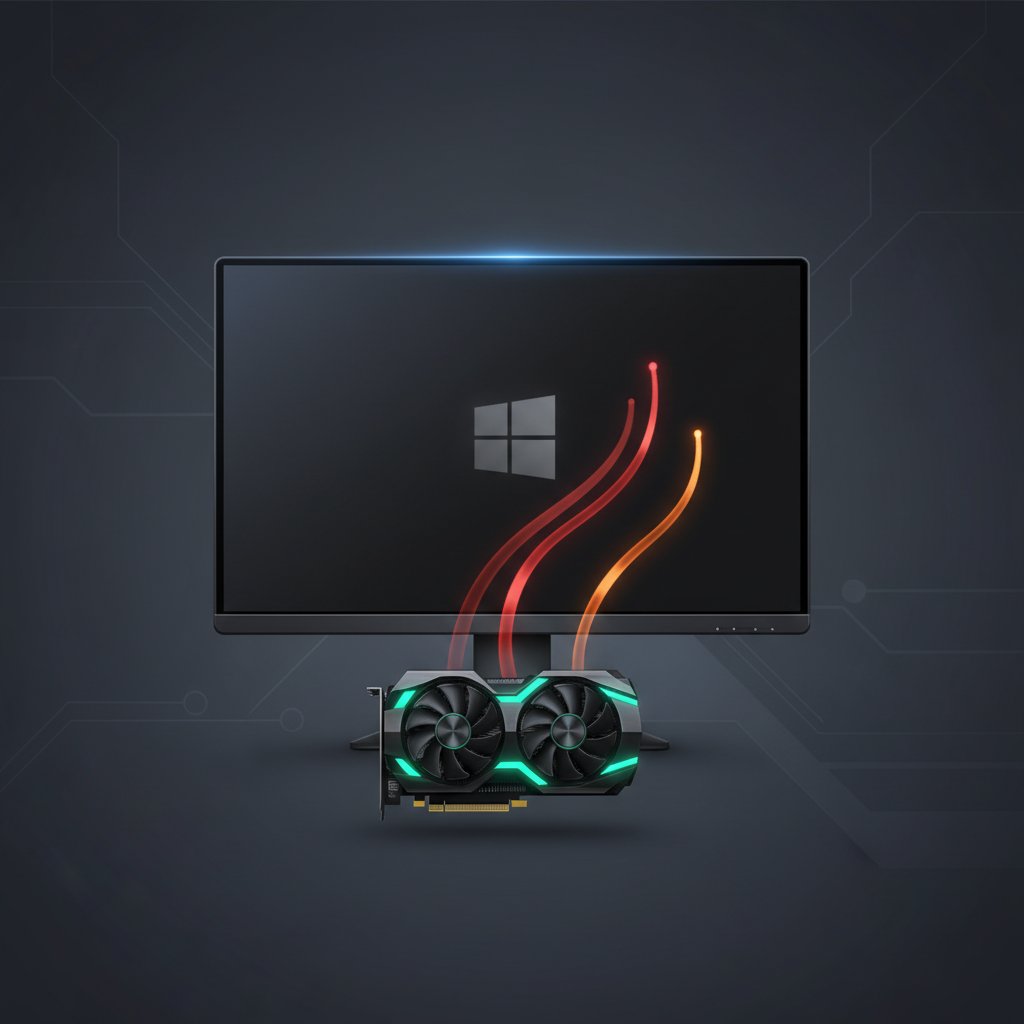
After installing the January 2026 cumulative update KB5074109, many Windows 11 PCs with NVIDIA GPUs experience a black screen that persists after the boot process completes. Unlike the UNMOUNTABLE_BOOT_VOLUME crash (which prevents booting entirely), this issue allows Windows to load in the background — you may hear the login sound — but the display remains completely black or flickers between black and normal for 1-2 seconds at a time.
The root cause is a conflict between KB5074109's updated display driver handling and NVIDIA's GPU driver stack. The update also introduced a bug with "Cloud-backed" desktop wallpapers (Windows Spotlight) that destabilizes display output. Microsoft confirmed the issue affects Windows 11 24H2 and 25H2 on systems running NVIDIA GeForce and Quadro GPUs.
When does it occur?
- After installing KB5074109 and restarting the PC
- At the Windows lock screen or desktop after sign-in
- As random 1-2 second black screen flickers during normal use
- When using Windows Spotlight for the desktop wallpaper
- Primarily on NVIDIA GPUs with driver versions 572.xx through 576.xx
- After resuming from sleep or hibernation
Common causes
- KB5074109 display driver handling conflict — The update changed how Windows initializes display drivers during boot, causing NVIDIA drivers to fail silently
- Windows Spotlight wallpaper bug — The cloud-based wallpaper feature triggers a display refresh loop that blacks out the screen
- NVIDIA driver incompatibility — Driver versions in the 572.xx-576.xx range interact poorly with the updated Windows display stack
- Corrupted display driver state — The update leaves the NVIDIA driver in a half-initialized state where it cannot properly output a signal
- Multiple monitor configurations — Systems with two or more monitors are disproportionately affected by the flicker variant
- G-SYNC or high refresh rate conflicts — G-SYNC enabled monitors at 144Hz+ show more frequent black screen episodes
Step-by-step fixes
- Install the out-of-band emergency patch — Go to Settings > Windows Update and check for KB5078127 (for 24H2/25H2) or KB5077797 (for 23H2). If you cannot see the screen, press
Win+Ctrl+Shift+Bto reset the display driver — this shortcut forces Windows to reinitialize the GPU output.
- Reset the display driver with keyboard shortcut — If your screen is black but Windows is running, press
Win+Ctrl+Shift+B. You will hear a beep and the screen should flash back on. This is a temporary fix that lasts until the next flicker.
- Change wallpaper from Windows Spotlight — Right-click the desktop > Personalize > Background > change from "Windows Spotlight" to "Picture" or "Solid color." If you cannot see the screen, press
Win+Ctrl+Shift+Bfirst, then change the setting quickly.
- Update NVIDIA drivers — Download the latest driver from nvidia.com/drivers (version 576.80 or newer). During installation, check "Perform a clean installation." Alternatively, use DDU (Display Driver Uninstaller) in Safe Mode for a thorough removal before reinstalling.
- Uninstall KB5074109 — Open Settings > Windows Update > Update history > Uninstall updates > find KB5074109 > Uninstall. If you cannot access Settings due to the black screen, boot into Safe Mode (hold Shift while clicking Restart, then Troubleshoot > Startup Settings > Enable Safe Mode).
- Disable G-SYNC temporarily — Boot into Safe Mode with Networking, open NVIDIA Control Panel > Display > Set up G-SYNC > uncheck "Enable G-SYNC." Set your monitor refresh rate to 60Hz temporarily under Display > Change resolution.
- Roll back the NVIDIA driver — Open Device Manager (
Win+X> Device Manager) > Display adapters > right-click your NVIDIA GPU > Properties > Driver > Roll Back Driver. Select a reason and confirm. This reverts to the previously installed driver version.
- Clean boot Windows — Press
Win+R, typemsconfig, go to Services tab, check "Hide all Microsoft services," click "Disable all." Go to Startup tab > Open Task Manager > disable all startup items. Restart to test if a third-party service is contributing to the conflict.
If it still doesn't work
If the black screen persists after all steps, perform an in-place repair install by downloading the Windows 11 ISO from microsoft.com, mounting it, and running setup.exe with the "Keep personal files and apps" option. This replaces system files without losing your data.
Microsoft's February 10, 2026 Patch Tuesday update is expected to include a permanent fix. Until then, pausing updates (Settings > Windows Update > Pause for 1 week) after uninstalling KB5074109 prevents it from reinstalling automatically. Monitor the Windows Release Health dashboard for official status updates.
Related errors
Fix Windows 11 UNMOUNTABLE_BOOT_VOLUME blue screen after installing KB5074109 January 2026 update. Recover your PC with WinRE and out-of-band patches.
Fix NVIDIA RTX 5090 and 5080 driver crashes with VIDEO_ENGINE_TIMEOUT_DETECTED error. Resolve black screens, game crashes, and DLSS instability on RTX 50 series GPUs.
Resolve Windows 11 black screen after latest 2025 updates. Complete guide to fix post-update black screens with cursor, blank display, and boot failures after KB patches on Windows 11.